Logo projectors: a projected mark where a sign won't do.
A logo projector casts your logo, an arrow or a safety symbol onto a floor, wall or facade. Big Shine supplies the unit, makes the custom gobo from your artwork, and installs and aims it for the surface, distance and light in the space.
Model, artwork and installation details are confirmed after the room brief is reviewed. No pricing is published; enquire for a quote.

Light, stencil, lens.
Inside the housing an LED light source shines through a gobo, a metal or glass stencil cut or printed with your artwork, and a lens focuses that pattern onto the surface. Because the mark is light rather than paint or vinyl, it can be switched off, moved, re-aimed or swapped for new artwork as the space changes.
Units differ in brightness class, in whether the image is fixed or slowly rotating, in whether the housing is rated for outdoor use, and in whether one fitting carries a single gobo or cycles through several. Which of those matters is decided by the room, not by the catalogue.
Where a projected mark earns its place.
The same fitting serves branding, direction and safety. The differences are the artwork, the surface and how the mark is meant to be read.
Brand marks
A logo on a floor, wall or facade at an entrance, reception or event. The mark can be moved or swapped when the layout changes.
Wayfinding
Arrows and prompts that guide people through venues, queues and visitor centres, in places where a printed sign would be missed or in the way.
Safety cues
Floor prompts such as STOP, pedestrian and forklift boundaries in warehouses and loading bays. A cue supports the site safety plan; it does not replace it.
Warehouse safety projectionRetail and hospitality
Seasonal artwork, product highlights and menu or promotion marks in shops, cafes and hotel lobbies without new signage each time.
Events and venues
Monograms, sponsor logos and themed patterns for launches, weddings and festivals; sizes and aiming points are worked out for the venue.
Architecture and public space
Decorative or directional light on building features, walkways and public areas, subject to the site owner and lighting permissions.
For the checks behind each application, including permissions and visibility in daylight, read logo and safety projection applications.
Projects with a visible mark.
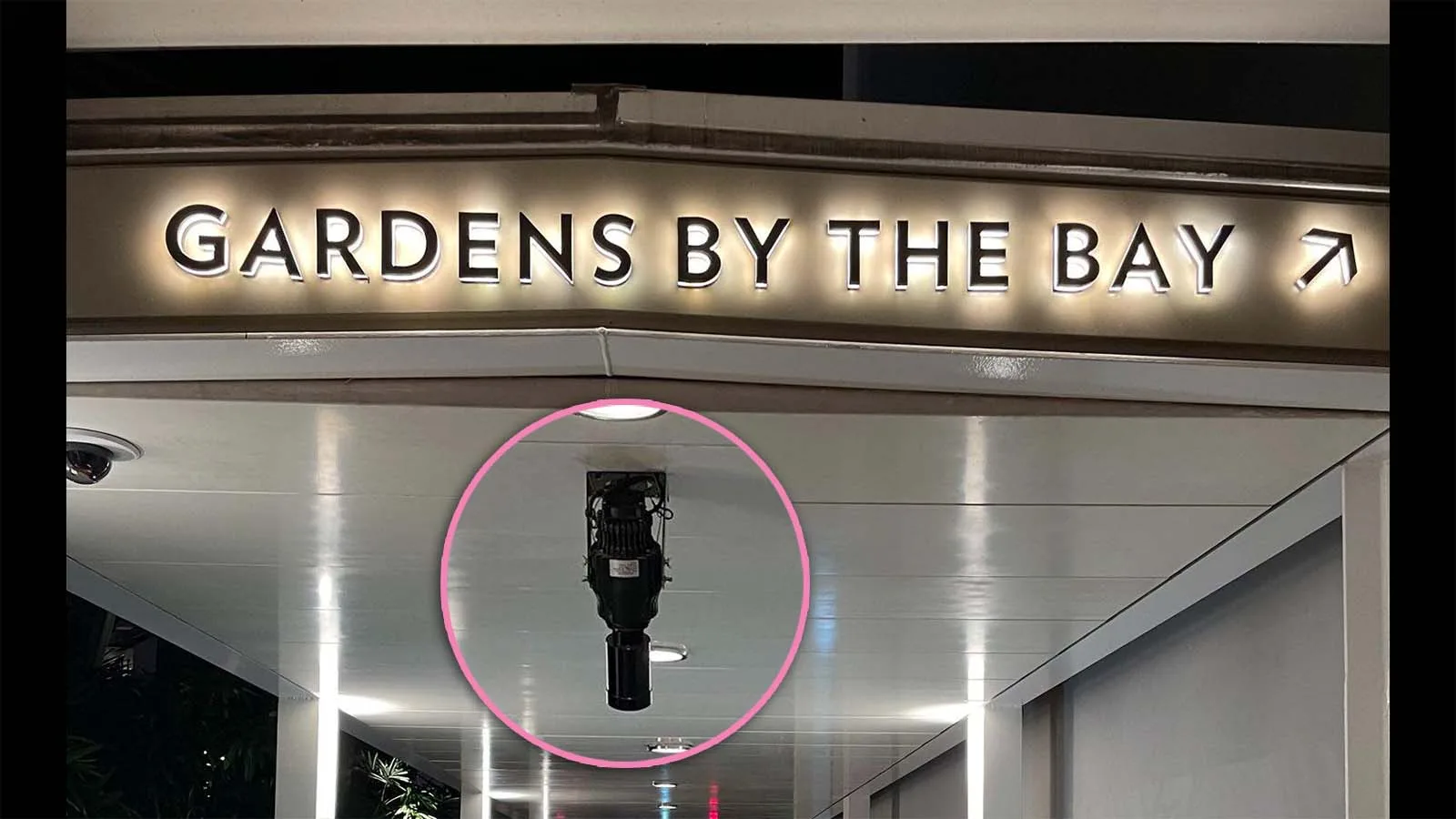 Outdoor directional path
 Gardens by the Bay
Four units are spaced roughly 15–20m from Bayfront MRT Exit B toward the main area.
Read the project note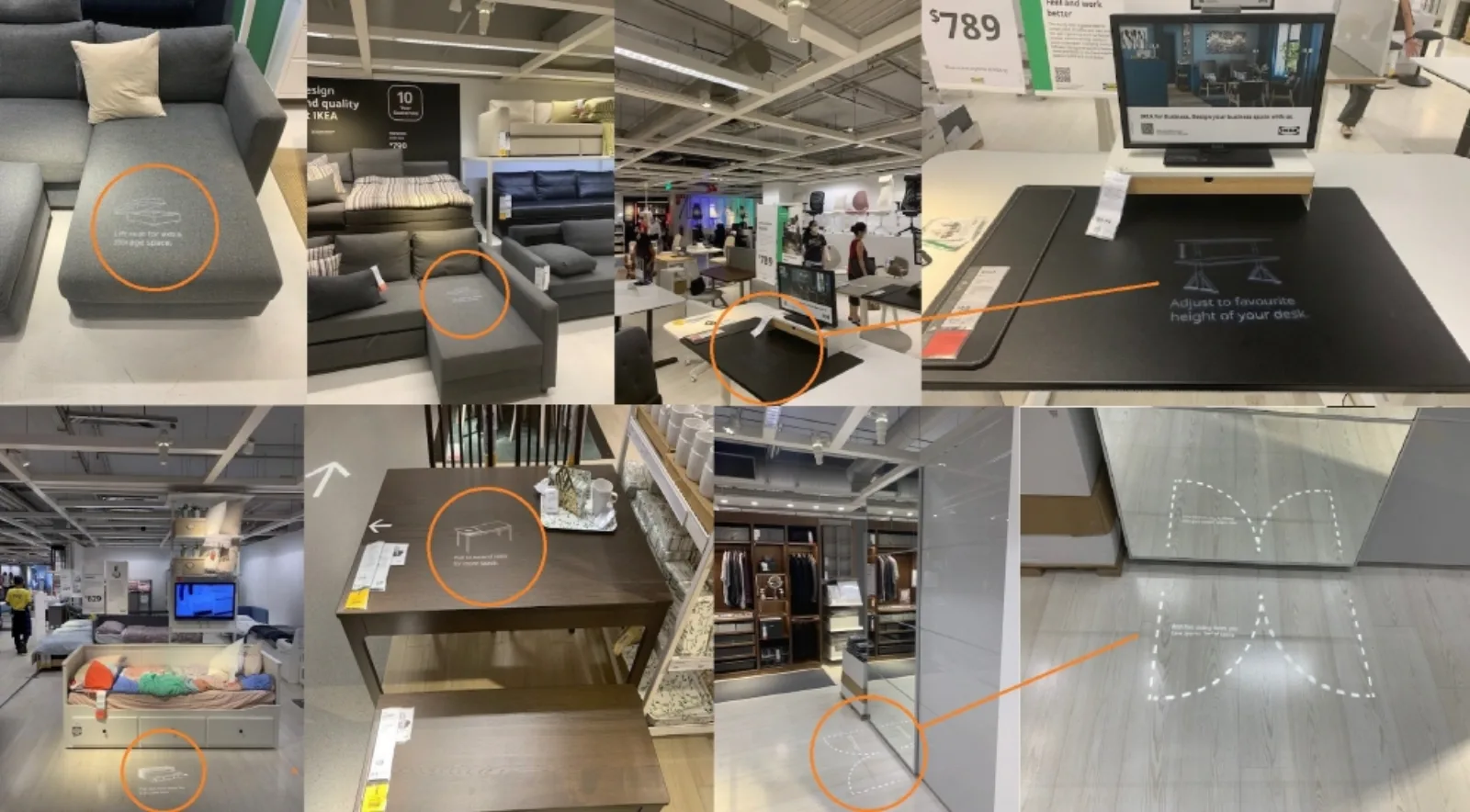 Retail wayfinding
 IKEA Alexandra
Projected instructions highlight hidden furniture functions for visitors.
Read the project note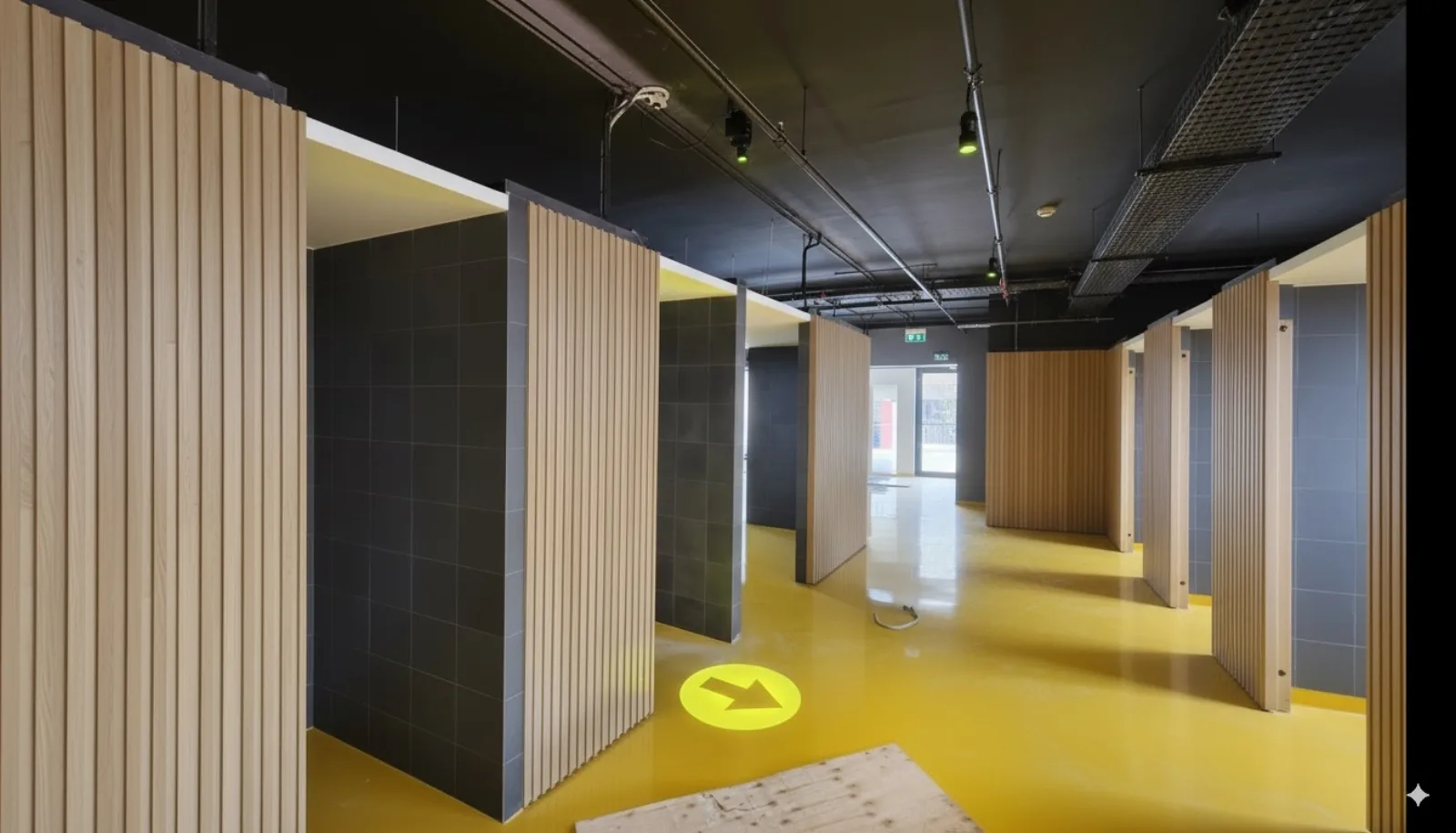 Warehouse safety
 DB Schenker
Illuminated directional arrows guide designated warehouse pathways.
Read the project note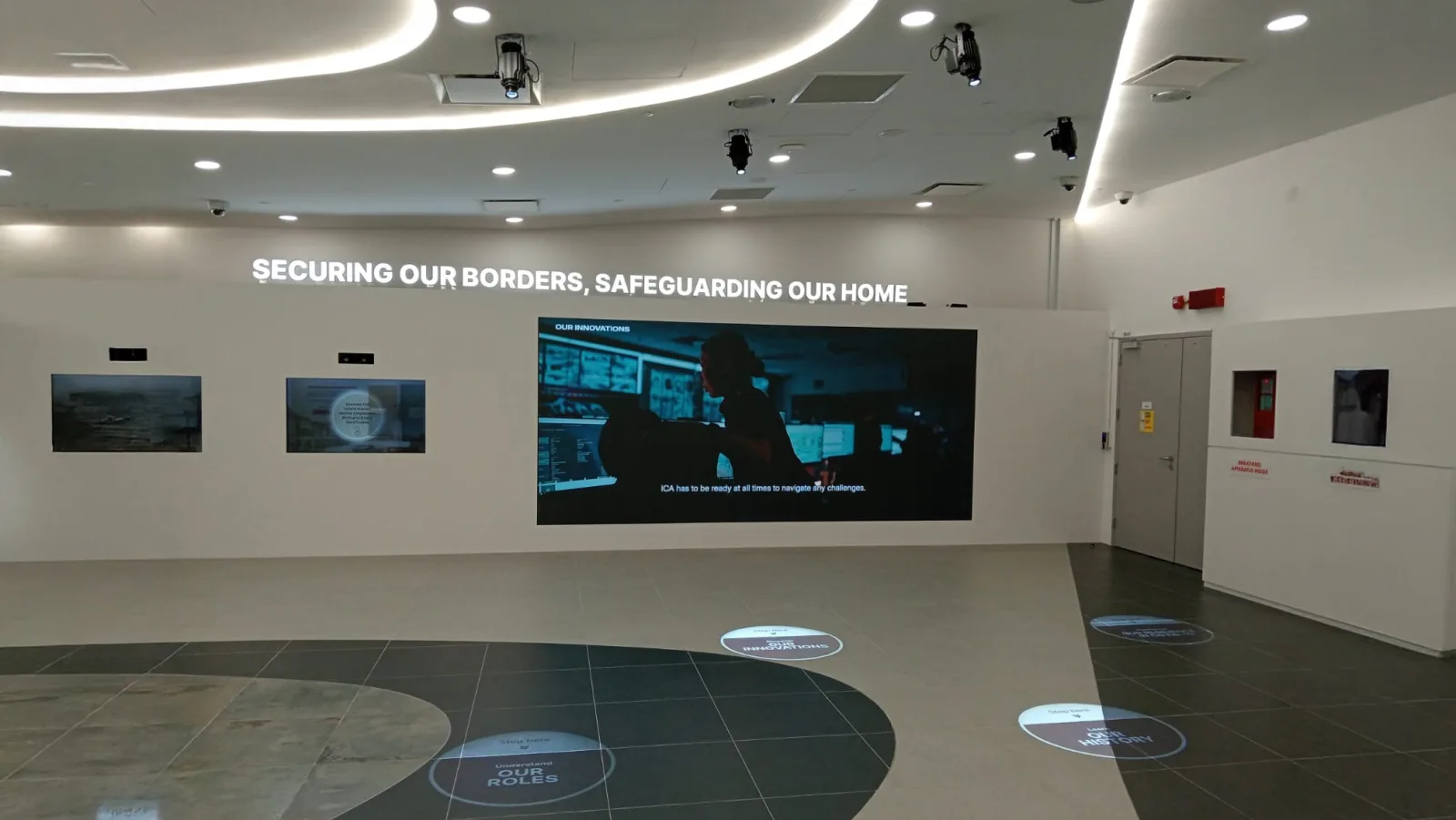 Visitor engagement
 ICA Services Centre
The source describes floor prompts and multiple displays; exact count and visitor outcome require internal confirmation.
Read the project noteMore installations are recorded in the project notes.
Three families, chosen by the room.
Compact fixed-image units
Small indoor housings for a single static logo, including concealed installation where the fitting should disappear into a ceiling.
Rotating single-gobo units
Indoor and outdoor-rated housings that can hold the image still or turn it slowly, in a range of brightness classes for larger or brighter spaces.
Multi-gobo changers
Outdoor-rated units that carry several logo lenses and cycle between them on a timer, for venues that need more than one message from one fitting.
Five things that set the unit.
- Artwork. The logo, message or symbol as a vector file if you have one. Fine detail and multi-colour artwork change the gobo type.
- Surface and size. Where the mark lands (floor, wall, facade), its material and finish, and roughly how large it should read.
- Distance and angle. Mounting point to surface, and how steep the angle is. This sets the lens and any keystone correction.
- Light and weather. Ambient light at the time the mark should be visible, and whether the unit sits indoors, under cover or fully outdoors.
- Mounting and power. What the fitting can attach to and where power is available. Ceiling, wall, pole and truss mounts are all in use.
The logo projector buyer guide walks through the artwork, optical and environmental checks in more depth.
Before you buy a logo projector.
What is a logo projector?
A logo projector, also called a gobo projector, is a lighting fitting that pushes light through a stencil (the gobo or logo lens) and a lens to cast a sharp image such as a company logo, an arrow or a warning symbol onto a surface.
How do I choose the right unit?
Start with the surface, the projection distance, the image size and the ambient light. Those four set the brightness class and lens; indoor or outdoor placement sets the housing. Send them in the brief and we will suggest a fit before anything is ordered.
Can logo projectors be used outdoors?
Outdoor-rated housings exist in the range. Whether a given unit suits a given spot depends on its ingress rating, the mounting position and how much cover it has, so outdoor placement is always confirmed against the specification.
What power do they need?
Units run from a mains supply; the exact requirement is on each model specification. Tell us where power is available near the mounting point and we will check it against the unit.
Is installation difficult?
It depends on the mounting point and the projection angle more than on the unit itself. Some fittings are a simple bracket mount; others need a survey, an aiming plan and a lift. Big Shine installs and aims the units it supplies.
How is the image customised?
The image is a custom gobo (logo lens) made from your artwork. Ordering it is part of the enquiry; the artwork type decides whether a metal or glass gobo is used.
What maintenance is needed?
Routine care is keeping the lens clean and following the manufacturer guidance for the light source. Model-specific instructions apply, so ask if you are unsure.
Can several units work together?
Yes. Larger areas, repeated cues along a route and combined displays use more than one unit. Spacing, overlap and aiming are planned per site.